

How to Understand Electrical Wire Specifications Before Buying

Updated: Jul 28
Buying electrical wire sounds simple. You go to a shop, ask for “wire,” and pick whatever looks fine. But wire is not a one-size-fits-all product. The wrong choice can lead to overheating, power loss, or even a fire hazard.
The good news is that every wire comes with a set of specifications printed right on its packaging or its insulation. Once you know how to read these specifications, buying the correct wire becomes easy and stress-free.
In this guide, we will break down every important specification you should check before buying electrical wires and cables. We will also explain these terms in plain language, so you don’t need to be an electrician to understand them.
Why Wire Specifications Matter
Every wire is designed for a specific job. A wire that works well for a table lamp will not work safely for an air conditioner or a water heater. If you use the wrong wire, you risk:
Overheating and melted insulation
Voltage drop, which weakens appliance performance
Short circuits and electrical fires
Frequent appliance damage
Reading the specifications correctly helps you avoid all of this. It also helps you get better value, since you will only pay for the exact wire your home or workplace actually needs. If you want to explore genuine, tested options, you can browse the full range of wires and cables before deciding what fits your project.
Understanding the Basic Parts of a Wire Specification
Most wire specifications include the following details:
Wire size or gauge
Conductor material
Insulation type
Voltage rating
Current rating
Temperature rating
Certification marks
Let’s look at each one closely.
1. Wire Size or Gauge

Wire size tells you how thick the metal conductor inside the wire is. It is usually written in square millimeters, like 1.5 sq mm, 2.5 sq mm, or 4 sq mm.
Here is a simple rule to remember: the thicker the wire, the more current it can carry safely.
Thin wires (0.75 sq mm to 1.5 sq mm) are common for lighting points and low-load circuits.
Medium wires (2.5 sq mm to 4 sq mm) suit plug points and general home wiring.
Thicker wires (6 sq mm and above) are needed for heavy appliances like air conditioners, geysers, and motors.
If you pick a wire that is too thin for the load it carries, it will heat up. Over time, this heat can damage the insulation and create a safety risk. So always match the wire size to the actual load of the appliance or circuit.
2. Conductor Material: Copper vs Aluminium

The conductor is the metal part inside the wire that actually carries electricity. Most home and commercial wiring uses copper because it conducts electricity efficiently, resists corrosion, and lasts for years.
When checking specifications, look for the purity of the copper used. High-quality wires use electrolytic grade copper, which offers better conductivity and a longer lifespan than lower-grade copper.
If you want wires built with high-purity copper conductors, you can check out these copper wires, which are designed for reliable, long-term performance. For projects that specifically call for uncoated conductors, bare copper cables and wires are also available and are often used for earthing and grounding applications.
3. Insulation Type: What Is Covering the Wire?

The insulation is the outer layer that protects the conductor and keeps you safe from electric shock. Different insulation types are made for different needs, so this is one of the most important specifications to check.
PVC FR (Flame Retardant) Wires
These wires have insulation that slows down the spread of fire. They are a good general-purpose choice for homes and offices. You can see the available range of PVC FR wires if this fits your requirement.
PVC FRLS (Flame Retardant Low Smoke) Wires
FRLS wires go a step further. Along with resisting flame, they release less smoke when exposed to fire. Less smoke means better visibility and easier evacuation during an emergency. These are commonly used in homes, offices, and commercial spaces. Take a look at these PVC FRLS wires for spaces where safety during a fire is a priority.
PVC FRLSH (Flame Retardant Low Smoke Halogen Free) Wires
FRLSH wires add one more layer of protection. They are halogen-free, which means they release fewer toxic and corrosive gases when burned. This makes them suitable for hospitals, malls, and other spaces with heavy footfall. You can explore PVC FRLSH wires for such high-safety installations.
HFFR (Halogen Free Flame Retardant) Wires
HFFR wires are designed for places where fire safety standards are very strict, such as airports, metro stations, and industrial plants. They do not release halogen gases, which are toxic and damaging to equipment. If your project needs this level of protection, browse these HFFR wires.
Choosing the right insulation is not just about following a rule. It is about matching the wire to where it will be used and how much fire safety that space demands.
4. Voltage Rating

Every wire has a voltage rating, usually written as something like 1100V or 650/1100V. This tells you the maximum voltage the wire can safely handle.
For most homes in India, a 1100V rated wire is the standard choice, since it covers all typical household voltage levels with a safe margin. Never use a wire with a voltage rating lower than what your circuit requires. This is one of the most overlooked specifications, but it plays a big role in long-term safety.
5. Current Rating (Ampacity)
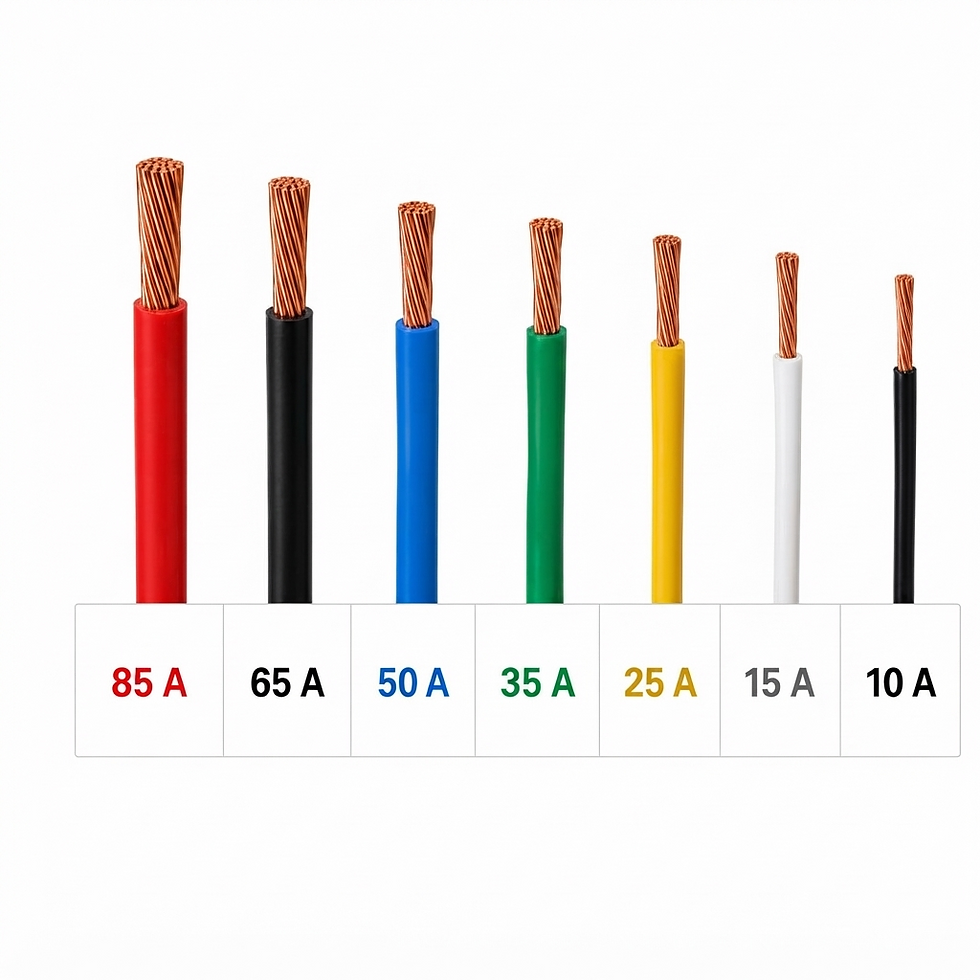
The current rating tells you how much electrical current, measured in amperes, the wire can carry without overheating. This rating depends on the wire size, insulation type, and even how the wire is installed (in open air, inside conduit, or bundled with other wires).
A simple way to check this: look at the appliance’s power rating and calculate the current it draws. Then choose a wire whose current rating comfortably covers that load, with some margin for safety. If you are unsure of the exact calculation, it is always better to consult an electrician or choose a slightly thicker wire than the bare minimum.
6. Temperature Rating

Wires also come with a maximum operating temperature, usually mentioned in degrees Celsius, such as 70°C or 90°C. This is the highest temperature the insulation can handle without breaking down.
If a wire will be installed in a hot area, like near a kitchen, a motor, or direct sunlight, choose a wire with a higher temperature rating. This small detail can make a big difference in how long your wiring lasts.
7. Certification and Standards
MARK | SIMPLE DESCRIPTION |
ISI Mark | Certified to Indian Standards. |
BIS Standard Mark | Approved by BIS for quality. |
BIS Registration No. | Unique BIS registration number. |
RoHS Compliant | Free from restricted hazardous substances. |
REACH Compliant | Meets chemical safety requirements. |
CE Mark | Complies with European standards. |
Always check for certification marks like ISI (Indian Standards Institute) on the wire packaging. Certified wires go through strict quality and safety testing before they reach the market. Buying certified wires protects you from substandard products that may look similar but fail under real-world use.
This is also where buying from a trusted source matters. Eleczo is a genuine online store for electrical products, and every wire listed is sourced from reliable, quality-tested brands. This gives you the confidence that what you see in the specifications is exactly what you get.
Decoding an Actual Wire Label: A Quick Example
It helps to see how all these specifications come together on a real wire label. Imagine you pick up a wire and see this printed on it:
“1.5 sq mm, Copper, PVC FRLS, 1100V, 90°C”
Here is what that actually means:
1.5 sq mm – This is the wire size, telling you the thickness of the copper conductor inside.
Copper – This tells you the conductor material used, which affects conductivity and durability.
PVC FRLS – This is the insulation type, meaning the wire resists flame and releases low smoke.
1100V – This is the voltage rating, the maximum voltage the wire is built to handle safely.
90°C – This is the temperature rating, showing how much heat the insulation can tolerate.
Once you can read one label this way, you can read any wire label. The order of details may change slightly between brands, but the same core information is always there.
How to Check Wire Quality Before You Buy
Specifications printed on the label are important, but a quick physical check can also help you spot a good-quality wire.
Check the insulation thickness. A good wire has even, consistent insulation with no thin or weak spots.
Look at the conductor strands. Quality copper strands look bright and uniform, not dull or uneven in size.
Read the printed markings closely. Genuine wires print the size, voltage rating, and brand name clearly and legibly at regular intervals along the length.
Feel the flexibility. Good insulation stays flexible and does not crack easily when bent.
These small checks, combined with reading the specification label, give you a complete picture before you make a purchase.
Common Mistakes to Avoid When Reading Wire Specifications
Buying based on price alone. Cheaper wires often use lower-grade copper or thinner insulation, which affects safety and lifespan.
Ignoring the current rating. Undersized wires are one of the most common causes of overheating.
Overlooking certification marks. A wire without proper certification may not have gone through safety testing.
Choosing insulation without thinking about the location. A wire that is fine for a bedroom may not be safe enough for a commercial kitchen or a crowded hallway.
Not checking the brand’s authenticity. Duplicate or unbranded wires often skip on quality, even if the specifications printed look correct.
Why Buy Wires and Cables from Eleczo
Eleczo focuses on offering genuine, quality-tested electrical products, so you don’t have to worry about hidden compromises in what you buy. Whether you need copper wires for home rewiring, FRLS or FRLSH wires for a fire-safe commercial space, or specialty cables for an industrial setup, you can compare specifications directly on the product page before making a decision.
This transparency matters. When you can see the exact wire size, insulation type, voltage rating, and certification details upfront, you are making an informed choice rather than a guess.
Final Thoughts
Reading electrical wire specifications does not need to be complicated. Once you understand the basics, like wire size, conductor material, insulation type, voltage rating, current rating, and certification, you can confidently choose the right wire for any project.
Take a little extra time before you buy. Check the specification label, match it to your actual need, and choose a trusted source. This small effort at the buying stage can save you from bigger problems, and bigger costs, later on.
Frequently Asked Questions
1. What is the difference between FR, FRLS, and FRLSH wires?
FR wires resist the spread of flame. FRLS wires do the same while also releasing less smoke. FRLSH wires go further by being halogen-free, which reduces toxic gas release during a fire.
2. How do I know what wire size I need for my home?
Wire size depends on the load of your appliances and circuits. Light points typically use thinner wires, while heavy appliances like air conditioners need thicker wires. When in doubt, consult a qualified electrician.
3. Is copper wire always better than aluminium wire?
For most home and commercial use, copper is preferred because it conducts electricity better and lasts longer. Aluminium is lighter and cheaper but is generally used in specific applications like overhead power lines.
4. Why does voltage rating matter if my home uses standard voltage?
The voltage rating includes a safety margin. Using a wire rated below your actual requirement increases the risk of insulation breakdown over time.
5. Can I use the same wire for indoor and outdoor wiring?
Not always. Outdoor wiring often needs wires with better resistance to heat, moisture, and sunlight. Always check the specification sheet for the intended use before installing.


Comments