

Ring Terminals Guide: Types, Uses & Buying Tips

Updated: Jul 2
Introduction to Ring Terminals
In modern electrical systems, secure wire connections are one of the most important factors that determine safety, efficiency, durability, and long-term performance. Whether the application involves residential wiring, industrial machinery, automotive systems, control panels, renewable energy installations, or heavy-duty electrical equipment, reliable cable terminations are essential for uninterrupted current flow and protection against electrical failures. Among the many connection components used in the electrical industry, the ring terminal remains one of the most trusted and widely used solutions for achieving strong and vibration-resistant wire connections.
A ring terminal is a specially designed electrical connector that allows wires or cables to be securely attached to studs, screws, or terminal blocks. Its circular ring-shaped end ensures that the connection remains firmly fixed even when subjected to movement, mechanical vibration, or harsh operating environments. Unlike open-ended connectors that can loosen or disconnect easily, ring terminals provide a highly dependable fastening mechanism, making them ideal for critical electrical applications.
The growing demand for efficient electrical infrastructure in industries, commercial buildings, automobiles, telecommunications, renewable energy systems, and automation projects has significantly increased the use of ring lugs and related cable termination accessories. Professionals often prefer a properly crimped ring lug terminal because it delivers excellent conductivity, minimizes power loss, and enhances overall electrical safety.
Today, ring terminals are manufactured in various materials, sizes, insulation types, and configurations to suit different cable gauges and electrical loads. From lightweight electronics to high-current industrial systems, these connectors play a vital role in ensuring efficient power transfer. Products such as copper lugs ring type and premium-grade copper ring lugs are especially popular because copper offers exceptional conductivity, corrosion resistance, and long service life.
Understanding the correct selection and application of ring terminals is essential for electricians, engineers, contractors, panel builders, maintenance professionals, and even DIY users. Choosing the wrong terminal can result in overheating, voltage drops, loose connections, equipment damage, or electrical hazards. This is why professionals carefully evaluate factors such as conductor size, insulation type, operating temperature, voltage rating, environmental exposure, and mechanical strength before selecting a suitable ring lug.
This comprehensive guide explores every major aspect of ring terminals in extensive detail, including their structure, working principles, types, materials, applications, benefits, comparisons, and buying considerations. Whether you are a beginner learning about cable connectors or an experienced professional searching for in-depth technical insights, this article will help you understand everything about ring terminals in a practical and user-focused manner.
What Is a Ring Terminal?

A ring terminal is an electrical connector designed to terminate the end of a wire or cable and create a secure connection with a stud or screw terminal. The terminal consists of two primary sections. The first is the barrel or crimping section, where the stripped conductor is inserted and mechanically compressed using a crimping tool. The second is the ring-shaped section that fits around a bolt or screw to establish a stable electrical connection.
The defining characteristic of a ring terminal is its closed circular ring. This design prevents accidental disconnection because the screw or bolt must be fully removed before the terminal can come loose. This makes ring terminals highly reliable in environments involving vibration, movement, or continuous mechanical stress.
A properly installed ring terminal provides several important benefits including strong mechanical retention, excellent electrical conductivity, reduced risk of loose connections, improved safety, and better resistance to vibration and shock. Because of these advantages, ring terminals are extensively used in automotive batteries, industrial control panels, electrical distribution systems, switchgear, generators, transformers, solar power systems, and telecommunications equipment.
Understanding the Structure of a Ring Terminal
To fully understand how ring terminals work, it is important to examine their structural components in detail.
Barrel Section
The barrel is the cylindrical portion where the conductor is inserted. This section is designed to accommodate specific wire sizes and ensure proper compression during crimping. Depending on the application, barrels may be insulated or non-insulated.
A correctly sized barrel is critical because an oversized barrel can result in weak crimps and poor conductivity, while an undersized barrel may damage the conductor strands.
Ring Section
The ring section is the circular opening that attaches to a stud or screw terminal. Ring sizes vary according to bolt dimensions, allowing compatibility with different fastening systems.
The ring design ensures a secure mechanical connection that remains stable under vibration and operational stress.
Insulation Sleeve
Many modern ring terminals include insulation sleeves made from PVC, nylon, or heat-shrink materials. These sleeves improve safety by preventing accidental contact, reducing the risk of short circuits, and protecting the crimp area from moisture and contaminants.
How Ring Terminals Work
The working principle of a ring terminal is relatively simple but extremely effective. After stripping the wire insulation, the conductor is inserted into the terminal barrel. A crimping tool compresses the barrel tightly around the conductor strands, creating both electrical and mechanical bonding.
Once crimped, the ring section is placed over a stud or screw and secured using a nut or fastening mechanism. This creates a low-resistance electrical path for current flow.
The effectiveness of the connection depends on several factors including proper terminal sizing, correct crimping pressure, suitable conductor compatibility, tight fastening torque, and high-quality conductive material.
Types of Ring Terminals
Ring terminals are available in numerous designs to suit different electrical and environmental conditions.
Insulated Ring Terminals
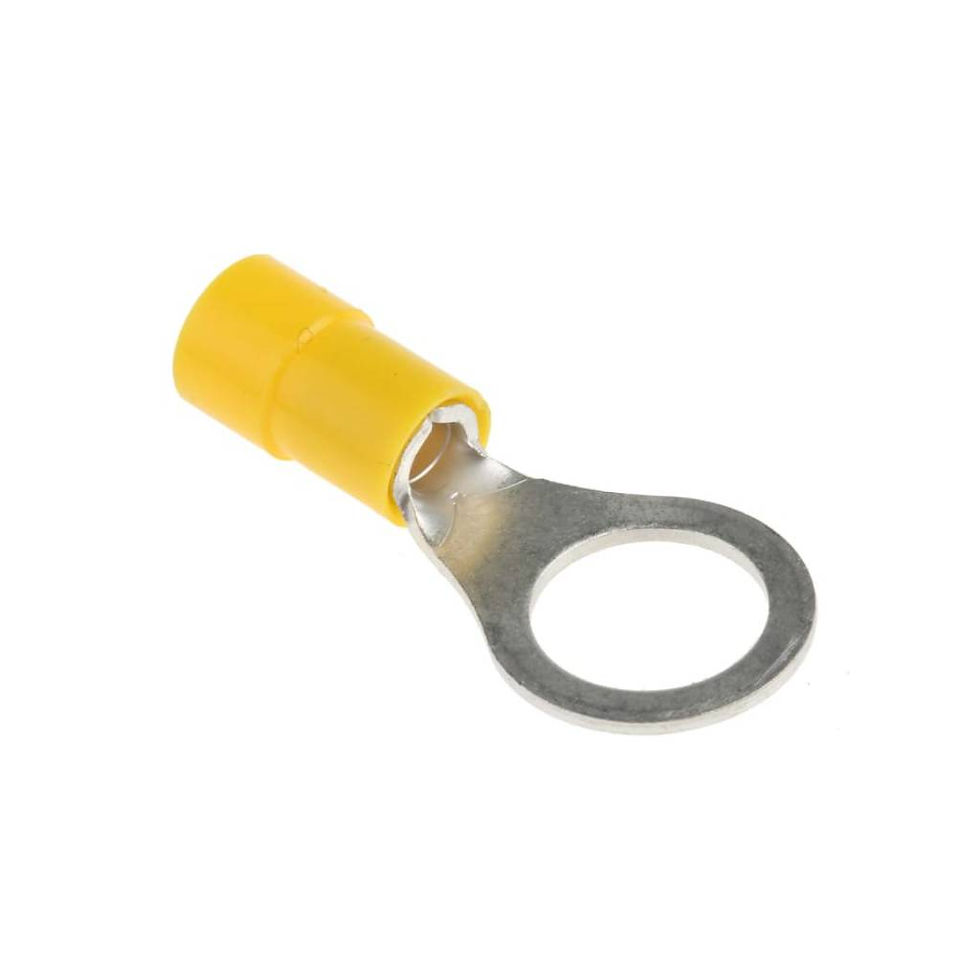
Insulated terminals feature protective sleeves that cover the barrel section. These are widely used in residential, automotive, and commercial electrical installations where accidental contact prevention is important.
These terminals offer enhanced user safety, reduced short-circuit risk, and improved insulation protection. They are commonly used in automotive wiring, home electrical systems, consumer electronics, and low-voltage control circuits.
Non-Insulated Ring Terminals

Non-insulated terminals are preferred in industrial and heavy-duty applications where higher temperature resistance and compact installation are required.
These terminals often allow visual inspection of the crimp quality, making them popular among professional electricians and control panel builders.
Heat Shrink Ring Terminals

Heat shrink terminals include adhesive-lined insulation that seals tightly around the cable after heating.
These are ideal for harsh environments because they offer waterproof protection, corrosion resistance, vibration resistance, and environmental sealing. Heat shrink variants are widely used in marine, solar, and outdoor electrical installations.
Heavy-Duty Ring Terminals

Heavy-duty terminals are designed for high-current applications involving thick conductors and large equipment.
These are commonly used in battery systems, industrial motors, power distribution panels, welding equipment, and renewable energy systems.
Materials Used in Ring Terminals
The performance of a ring terminal depends heavily on its material composition.
Copper Ring Terminals

Copper is the most preferred material because of its superior electrical conductivity and excellent mechanical properties. High-quality copper ring lugs are capable of carrying large currents with minimal resistance.
Copper offers excellent conductivity, high corrosion resistance, long service life, strong mechanical performance, and better heat dissipation. Because of these properties, copper lugs ring type products are extensively used in industrial electrical systems and power distribution networks.
Tinned Copper Ring Terminals

Tinned copper terminals feature a protective tin coating over copper.
This coating improves corrosion resistance, oxidation protection, and environmental durability. These terminals are commonly used in marine and outdoor installations.
Aluminum Ring Terminals

Aluminum terminals are lighter and more economical than copper, but they have lower conductivity. They are generally used in specific utility and power transmission applications.
Brass Ring Terminals

Brass terminals are used in specialized low-current applications where corrosion resistance and mechanical durability are priorities.
Importance of Proper Ring Terminal Selection
Selecting the correct terminal is crucial for system safety and efficiency. Improper selection can lead to overheating, poor conductivity, equipment failure, and safety hazards.
Wire Size Compatibility
The terminal barrel must match the conductor size precisely. Using incorrect sizes compromises electrical performance and connection reliability.
Current Carrying Capacity
Each terminal has a current rating based on its design and material. High-current applications require heavy-duty terminals with larger contact areas.
Environmental Conditions
Installations exposed to moisture, chemicals, vibration, or extreme temperatures require specialized terminals such as heat shrink or tinned copper variants.
Stud Size Compatibility
The ring opening must fit the intended stud or bolt size correctly to ensure secure fastening.
Applications of Ring Terminals
Ring terminals are used across numerous industries because of their reliability and versatility.
Automotive Industry
Automotive systems rely heavily on ring lugs for battery connections, grounding systems, lighting circuits, alternators, and fuse boxes.
Vehicles experience constant vibration and temperature fluctuations, making secure connections essential.
Industrial Machinery
Industrial equipment uses ring lug terminal solutions for motors, transformers, switchgear, control panels, and automation systems.
Industrial environments often involve high currents and mechanical stress, requiring durable and vibration-resistant connectors.
Renewable Energy Systems
Solar and wind energy systems require reliable cable terminations for efficient power transfer.
Ring terminals are commonly used in solar inverters, battery banks, charge controllers, and junction boxes.
Marine Applications
Marine environments expose electrical systems to moisture, salt, and corrosion. Tinned copper and heat shrink ring terminals are preferred because they provide long-lasting protection.
Telecommunications
Telecommunication equipment uses ring terminals for grounding, power distribution, and signal system wiring.
Advantages of Using Ring Terminals
Ring terminals offer several important advantages over other connector types.
Superior Connection Security
The closed-ring design prevents accidental disconnection.
Excellent Vibration Resistance
Ring terminals remain stable in vibrating environments.
Improved Electrical Conductivity
Proper crimping creates low-resistance current paths.
Enhanced Safety
Secure connections reduce arcing and overheating risks.
Easy Maintenance
Technicians can inspect and replace terminals easily during maintenance procedures.
Comparing Ring Terminals with Other Connector Types
Ring Terminals vs Fork Terminals
Fork terminals are easier to remove but less secure under vibration.
Ring terminals provide better mechanical retention and safety.
Ring Terminals vs Spade Connectors
Spade connectors allow faster installation but may disconnect accidentally.
Ring terminals offer stronger fastening for critical systems.
Ring Terminals vs Pin Terminals
Pin terminals are mainly used in terminal blocks, while ring terminals are better for stud connections.
Why Copper Ring Lugs Are Widely Preferred
Professionals often choose copper ring lugs because copper delivers superior conductivity and durability.
High-quality copper lugs ring type products minimize power loss, improve energy efficiency, and support higher current loads. They are particularly valuable in industrial control panels, transformers, switchgear, solar installations, and battery systems where stable power transfer is essential.
Additionally, copper withstands thermal cycling better than many alternative materials, making it suitable for demanding electrical environments.
Understanding Cable Terminal Ends Price
The cable terminal ends price varies significantly depending on several important factors.
Material Quality
Copper terminals typically cost more than aluminum variants because of better conductivity and durability.
Insulation Type
Heat shrink and heavy-duty insulated terminals are usually more expensive.
Manufacturing Standards
Certified industrial-grade terminals cost more but provide higher reliability.
Current Rating
Large terminals designed for high-current systems generally have higher prices.
Brand Reputation
Premium manufacturers often offer better quality control, plating, and material consistency.
While evaluating cable terminal ends price, buyers should focus on long-term reliability rather than only choosing the lowest-cost option. Poor-quality terminals may lead to maintenance issues, downtime, or safety risks.
Buying Guide for Ring Terminals
When purchasing ring terminals, it is important to buy from a trusted electrical supplier that offers genuine products, multiple size options, and reliable quality assurance. Choosing premium-quality ring terminals ensures better electrical conductivity, stronger crimping performance, longer durability, and safer operation across residential, commercial, and industrial installations.
For customers looking to purchase high-quality ring lugs, ring lug terminal products, copper lugs ring type connectors, and copper ring lugs, Eleczo is one of the preferred online destinations for electrical products in India. Eleczo offers a wide range of cable accessories, electrical connectors, wiring accessories, and industrial electrical components suitable for various applications.
One of the biggest advantages of purchasing ring terminals from Eleczo is the availability of multiple product categories from trusted electrical brands. Buyers can easily compare specifications, sizes, materials, and compatibility before selecting the right terminal for their application. Whether the requirement is for automotive wiring, panel board installation, industrial machinery, solar projects, or electrical maintenance work, users can find suitable terminal options according to conductor size and current requirements.
Eleczo also helps buyers evaluate cable terminal ends price more effectively because the platform offers different product ranges suitable for both economical and premium industrial applications. Instead of purchasing low-quality local products that may compromise safety and conductivity, customers can invest in reliable and durable terminals that improve long-term electrical performance.
Another important benefit of buying from Eleczo is product accessibility and convenience. Electricians, contractors, industries, maintenance teams, and individual buyers can browse electrical products online, review technical details, compare brands, and place orders conveniently without depending on limited local availability.
When purchasing ring terminals from Eleczo, buyers should carefully check:
Cable size compatibility
Stud size requirements
Material type
Insulation category
Current carrying capacity
Application environment
Product quality standards
Selecting the correct ring terminal is essential for ensuring secure electrical connections, minimizing voltage loss, improving safety, and extending the life of electrical systems.
Featured Ring Terminals from Eleczo
Conclusion
Ring terminals are among the most important components in modern electrical and electronic systems because they provide secure, efficient, and long-lasting wire connections. From residential wiring and automotive systems to industrial machinery, renewable energy infrastructure, telecommunications, and marine applications, these connectors play a critical role in ensuring electrical safety and reliable power transfer.
The widespread use of ring terminal solutions is driven by their strong mechanical retention, excellent conductivity, vibration resistance, and compatibility with various cable types and current ratings. Products such as ring lugs, ring lug terminal, copper lugs ring type, and premium-grade copper ring lugs continue to remain highly preferred choices among professionals because they offer dependable performance in demanding environments.
Choosing the right ring terminal requires careful evaluation of conductor size, current capacity, insulation type, and application environment. High-quality terminals improve electrical efficiency, reduce maintenance concerns, and enhance long-term safety.
For buyers looking for reliable electrical accessories and trusted product quality, Eleczo provides a convenient platform to explore a wide range of ring terminals and cable connection solutions suitable for residential, commercial, and industrial applications. By selecting quality-tested terminals from trusted suppliers, users can ensure stronger electrical performance, improved connection stability, and longer operational life for their electrical systems.
As industries continue advancing toward automation, renewable energy adoption, smart infrastructure, and high-efficiency electrical networks, the demand for durable and high-performance ring terminals will continue growing. Whether you are an electrician, engineer, contractor, maintenance professional, or DIY enthusiast, understanding ring terminal technology thoroughly will help you build safer, stronger, and more reliable electrical connections for every application.
Frequently Asked Questions About Ring Terminals
What is the main purpose of a ring terminal?
A ring terminal is used to create a secure electrical connection between a wire and a stud or screw terminal. Its closed-ring design prevents accidental disconnection and improves vibration resistance.
Why are copper ring terminals preferred?
Copper offers excellent conductivity, durability, corrosion resistance, and heat dissipation. This makes copper ring lugs highly reliable for industrial and high-current applications.
What is the difference between insulated and non-insulated ring terminals?
Insulated terminals provide additional protection against accidental contact and short circuits, while non-insulated terminals are commonly used in industrial systems requiring compact installation and high-temperature resistance.
How do I choose the correct ring terminal size?
You must match both the wire gauge and stud size. The barrel should fit the conductor properly, and the ring opening should align with the mounting stud.
Are heat shrink ring terminals waterproof?
Heat shrink terminals with adhesive lining provide strong moisture resistance and are widely used in marine and outdoor environments.
Are ring terminals suitable for high-vibration environments?
Yes. One of the biggest advantages of a ring lug is its excellent resistance to vibration-related loosening.


Comments